


Polyphemus & Odysseus – 3D Sculptural Shadow Box | Πολύφημος και Οδυσσέας
150,00 €
1 in stock
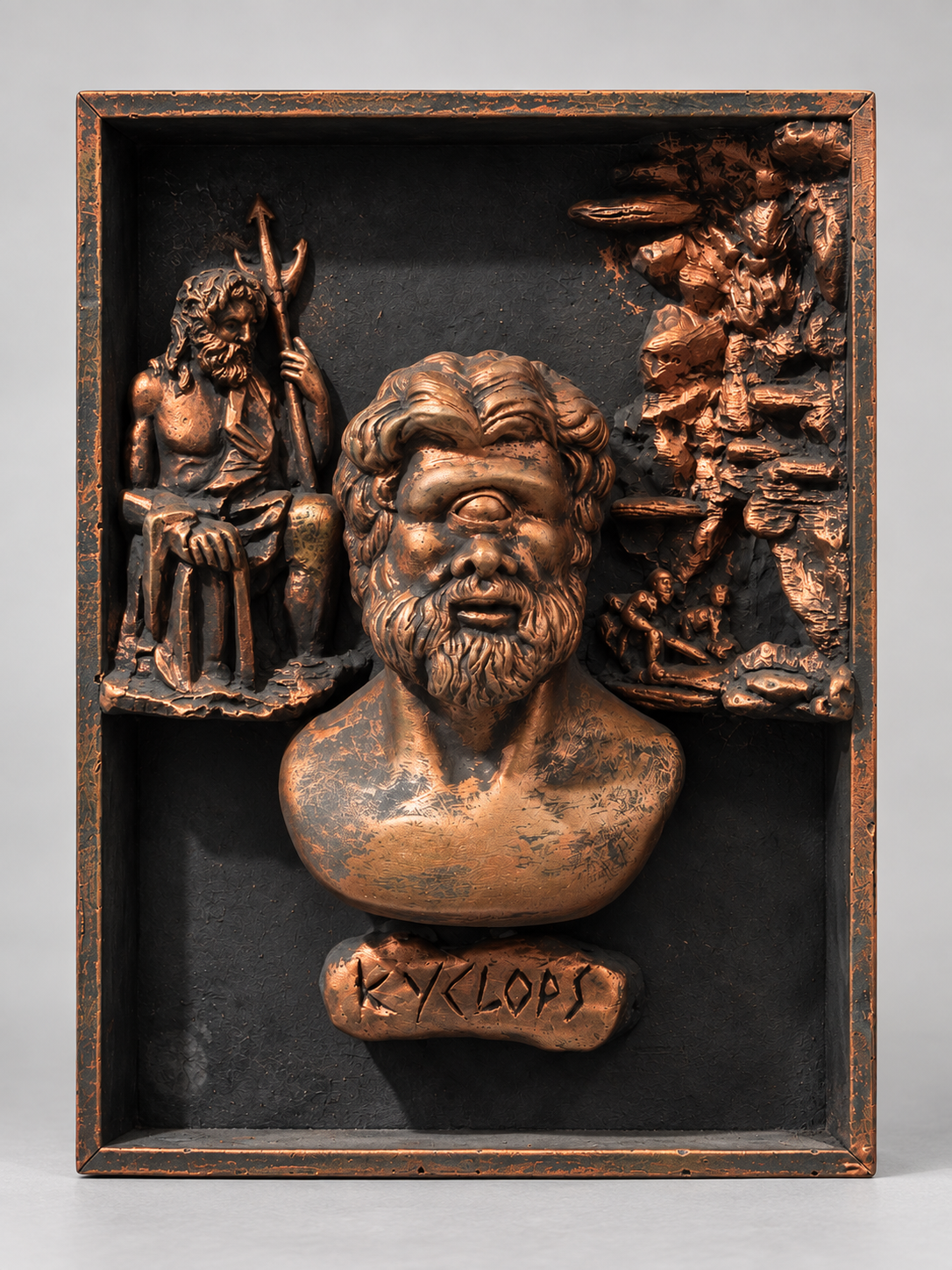
A three-dimensional framed depiction of Polyphemus, Poseidon and Odysseus at the Cyclops’ cave. 20 × 26.5 × 7 cm.
Τρισδιάστατη κορνίζα με τον Πολύφημο, τον Ποσειδώνα και τον Οδυσσέα στο σπήλαιο του Κύκλωπα. 20 × 26,5 × 7 εκ.
Ancient Symposium · Myth in sculptural depth
One eye.
Three lives intertwined.
A voyage changed forever.
First, the face holds your gaze. Then your eye wanders: a trident on the left, a cave on the right, small figures almost hidden in the rock.
This shadow box invites a second look. The great head of Polyphemus is the centre of a story that reaches beyond him — towards Odysseus, towards Poseidon, and towards the dangerous sea between a traveller and his home.
01 · The face at the centre
Meet Polyphemus.
The single eye, the weight of the brow, the deep-cut beard: the Cyclops is the first presence you encounter. His projecting bust brings the composition out of the dark background and into the space before the frame.
In Book 9 of Homer's Odyssey, Polyphemus is a giant shepherd who lives in a cave. For Odysseus and his companions, that shelter becomes a trap.
Look again at the smaller scene. The scale changes, and the monumental face becomes part of a much larger narrative.
The details keep the story unfolding.
02 · The smaller figures
Odysseus: a mind against a giant.
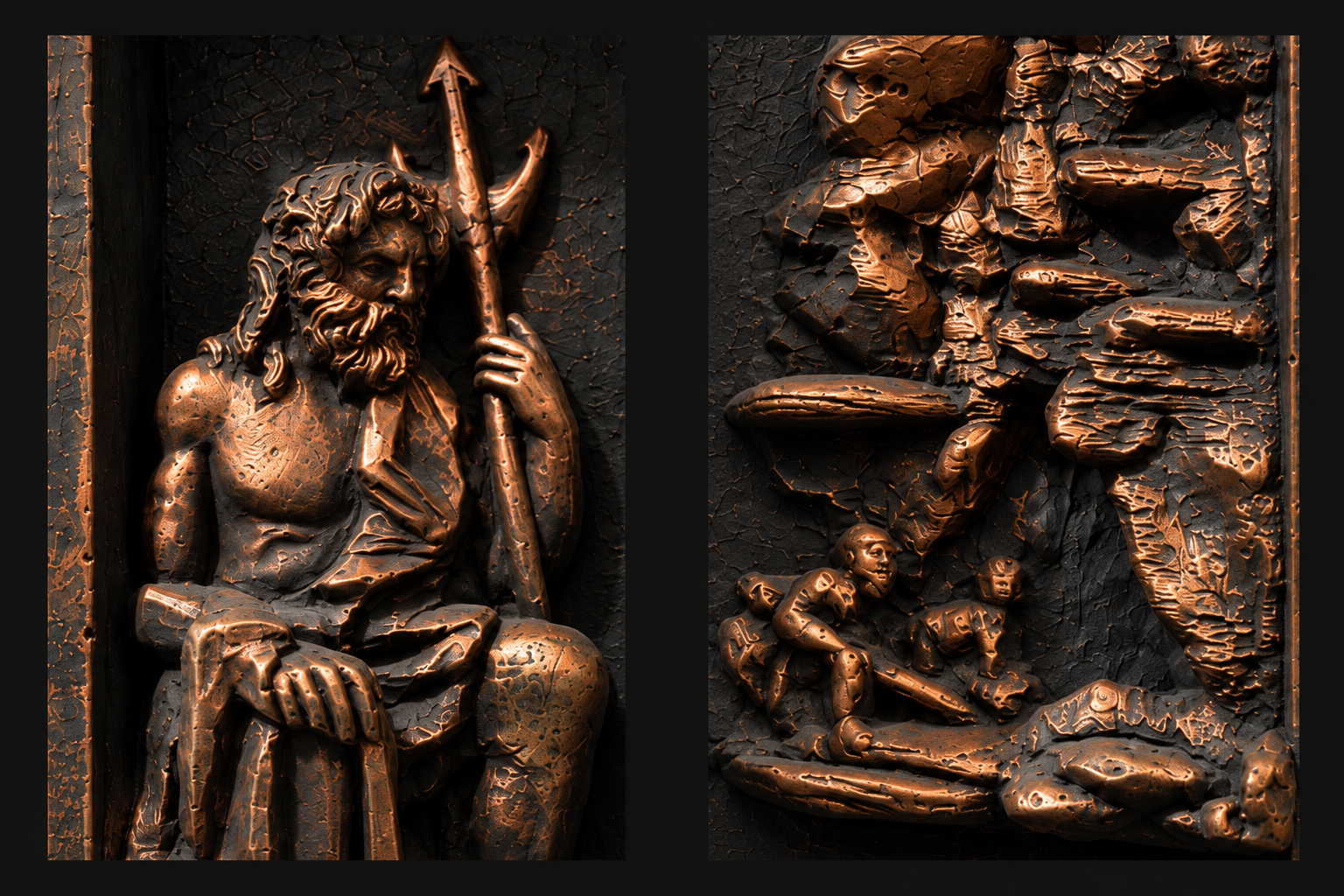
The cave relief compresses human action into a narrow rocky space. Its small figures ask you to move closer; this is a story discovered in details.
In Homer, Odysseus offers wine and gives the name “Nobody.” He and his men blind the sleeping Cyclops with a sharpened olive-wood stake. When Polyphemus calls for help, his use of that name prevents the other Cyclopes from understanding the attack.
The flock then offers an escape beneath the animals. Within the frame, the cave, figures and animal forms become visual clues to this encounter — a whole episode held beside the giant's face.
03 · The figure with the trident
Poseidon is not a bystander.
On the left, the seated god carries the unmistakable trident. His presence brings the sea into the enclosed world of the cave.
Polyphemus is Poseidon's son. After Odysseus escapes and reveals his true name, the Cyclops calls upon his father to punish the traveller's return.
That relationship gives the composition its tension. The father, the son and the man who wounded him share one frame. A moment of escape is also the beginning of consequences.
04 · Light becomes part of the work
A story with a physical presence.
This is a three-dimensional framed composition, not a flat print. The dark recesses hold the scene; warm bronze-toned highlights bring faces, hair, rock and the trident forward.
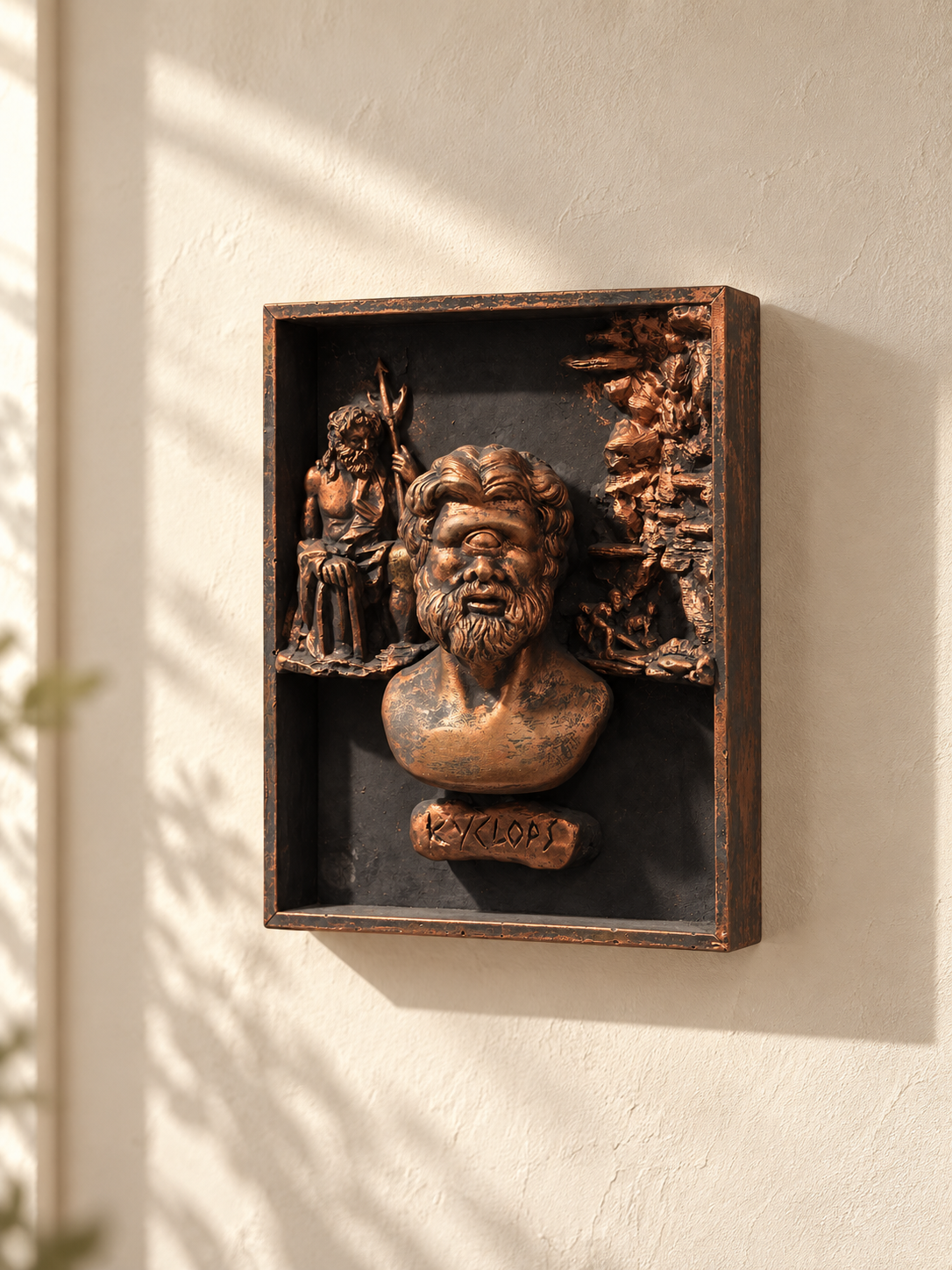
Move your viewpoint and notice what comes into focus. Gentle light from one side can emphasise the relief and the shadows between its layers.
At 20 × 26.5 × 7 cm, the work offers an intimate encounter: close enough to read the small details, deep enough to change as you look.
The artwork at a glance
- Artwork
- Polyphemus & Odysseus · sculptural shadow box
- Dimensions
- 20 cm wide × 26.5 cm high × 7 cm deep
- Appearance
- Bronze-toned finish against a dark recessed background
- Figures
- Polyphemus, Poseidon and Odysseus with his companions
- Literary inspiration
- Homer's Odyssey, Book 9
05 · Give the story a place
For the wall that deserves a conversation.
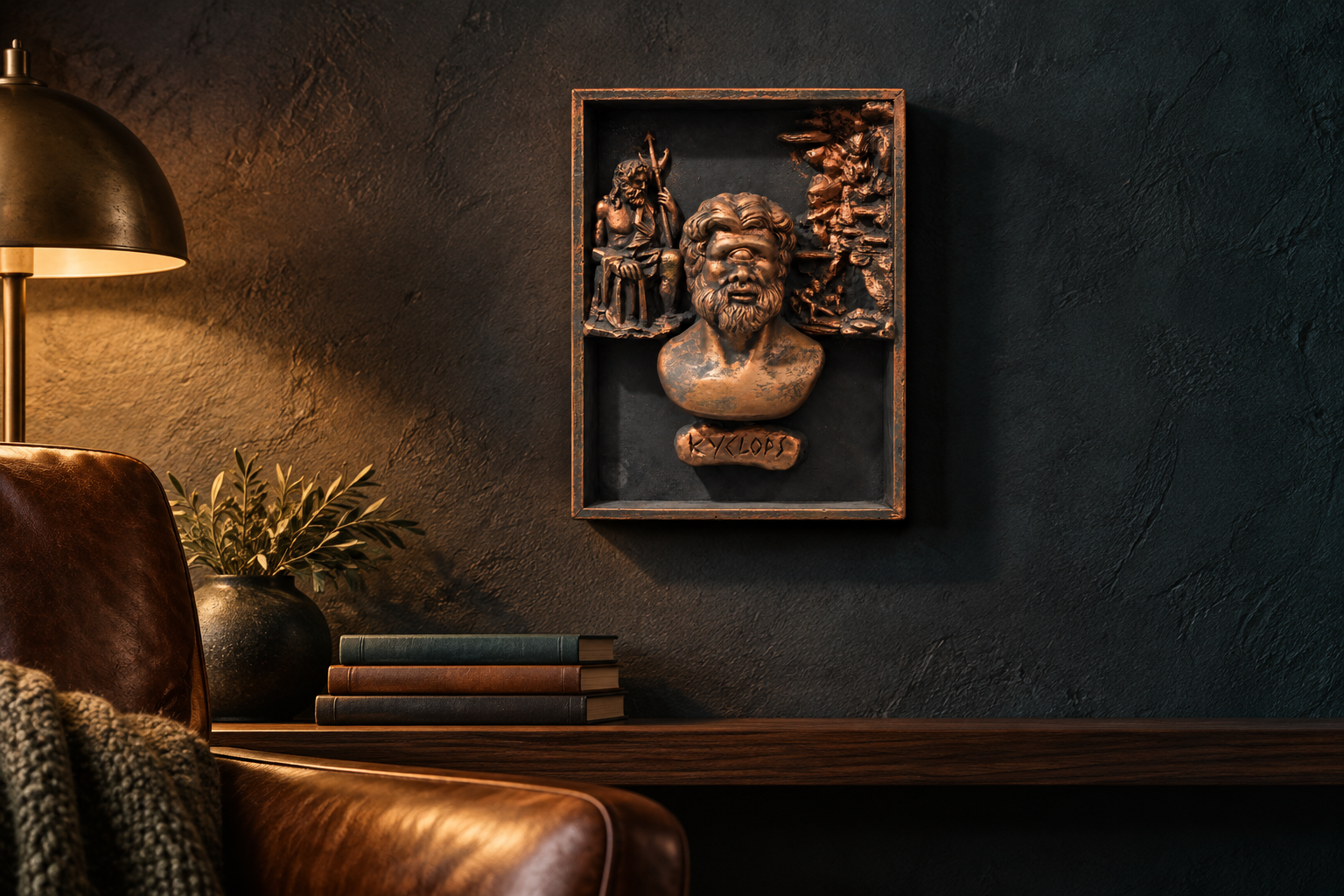
For someone who loves Greek myth, a sculptural object offers more than a familiar name. It gives the story a form to return to: a face, a gesture, a shadow, a detail noticed for the first time.
Choose this work for your own space or as a thoughtful gift for a reader, a traveller or a lover of Greek art. Let the first question be simple: Who is the figure with the trident?
Η ιστορία του έργου στα ελληνικά
Στο κέντρο, το πρόσωπο του Πολύφημου επιβάλλεται με τον μοναδικό του οφθαλμό. Αριστερά, ο πατέρας του, Ποσειδώνας, κρατά την τρίαινα. Δεξιά, οι μικρές μορφές και οι βράχοι του σπηλαίου οδηγούν το βλέμμα στην περιπέτεια του Οδυσσέα.
Στη ραψωδία ι της Οδύσσειας, ο Οδυσσέας χρησιμοποιεί την πανουργία για να ξεφύγει από τον Κύκλωπα. Όταν όμως αποκαλύπτει το όνομά του, ο Πολύφημος ζητά από τον Ποσειδώνα να δυσκολέψει την επιστροφή του. Έτσι, οι τρεις μορφές της σύνθεσης συνδέουν τον εγκλωβισμό, τη διαφυγή και τις συνέπειες.
Η τρισδιάστατη κορνίζα, με σκοτεινό βάθος και χάλκινες αποχρώσεις, αναδεικνύει τις λεπτομέρειες καθώς αλλάζει η γωνία θέασης και το φως. Διαστάσεις: 20 × 26,5 × 7 εκ. Οι πρώτες φωτογραφίες παρουσιάζουν το ίδιο το προϊόν· οι πρόσθετες εικονογραφήσεις προτείνουν κοντινή ανάγνωση και τοποθέτηση στον χώρο.
Story reference: Homer, Odyssey · Book 9; Perseus Digital Library · Odyssey 9.
The artwork is a contemporary interpretation of the myth. Editorial detail and interior styling images are illustrative adaptations of product photographs. Refer to the original views for the exact composition and to the listed dimensions for size.
